
Garage door springs are the powerhouse of any garage door system. They lift hundreds of pounds of weight daily, maintain smooth operation, and protect the opener from excessive strain. Yet despite their importance, many homeowners misunderstand how springs work—or attempt adjustments that should only be done by qualified professionals. This guide explains what you can safely do, what you absolutely should not do, and how to approach garage door spring adjustment without putting your home or safety at risk. Industry sources like the International Door Association (IDA) and DASMA emphasize that improper spring handling is a major cause of garage-related injuries, so knowing your limits is essential.
Before diving into procedures, it’s helpful to understand the two main types of springs: torsion and extension. Each operates differently, requires unique maintenance methods, and carries different levels of risk when adjusted. When reviewing torsion vs extension spring adjustments, it’s clear that torsion springs carry much higher tension and therefore far greater danger. Extension springs are slightly more approachable for inspection, but still not recommended for DIY tension adjustment. Incorrect handling can cause sudden release of force, door imbalance, damaged tracks, or severe personal injury. This is why even in areas with many service providers — such as those offering garage door spring repair in Huntington Beach —professionals warn homeowners to avoid attempting adjustments beyond basic safety checks.
Understanding the Two Main Spring Types
To determine what you can safely do yourself, you need a clear understanding of how garage door springs work. Both are designed to counterbalance the door, but their mechanisms differ dramatically. Below is a technical comparison.
Torsion Springs
Mounted horizontally above the garage door, torsion springs twist to create torque. As the door lowers, energy stores in the coils. When the door lifts, the spring unwinds and releases energy. Springs operate under extremely high tension—often hundreds of pounds of stored force. DASMA technical documents repeatedly stress that torsion spring adjustment safety must never be taken lightly. Adjusting, loosening, or tightening set screws without professional tools and training can cause catastrophic injury.
Extension Springs
These springs run vertically or horizontally along the tracks. Unlike torsion springs, they stretch as the door closes and contract as it opens. While considered less dangerous, they still hold enough energy to cause serious damage if mishandled. The key safety feature of extension springs is the safety cable, which prevents the spring from flying across the garage if it snaps. Any issues with safety cables make tension adjustments even riskier.
Here is a comparison table for clarity:
| Feature | Torsion Springs | Extension Springs |
|---|---|---|
| Location | Mounted above the door | Along tracks |
| How they work | Twist and store torque | Stretch and contract |
| Risk level | Very high | Moderate |
| Requires safety cables? | No | Yes |
| DIY-friendly? | No | Low-level inspection only |
| Lifespan | Longer | Shorter |
Understanding these mechanical differences is essential before reviewing what you can and cannot safely do as a homeowner.
What Homeowners Can Safely Do Themselves
Although you should never attempt to loosen, tighten, or replace springs, there are several maintenance tasks homeowners can safely manage. These actions fall under routine upkeep and inspection—not adjustment—and are endorsed by IDA as part of responsible home maintenance.
Visual Inspection of Springs and Hardware
The safest task you can do is visually inspect springs, cables, bearings, and brackets. Look for rust, stretching, gaps in coils, loose cables, or signs of friction. Identifying these symptoms early helps extend the lifespan on door springs and may prevent sudden breakdowns. Many common mistakes with springs — such as ignoring imbalance or corrosion — can be avoided by basic visual checks.
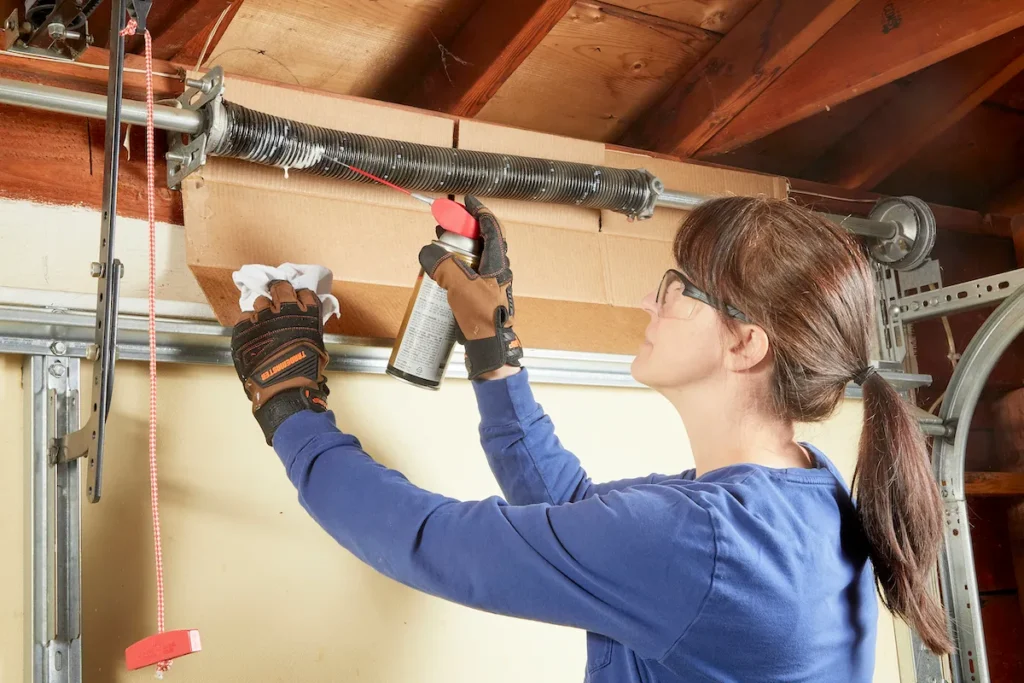
Lubricating Springs
Lubrication is one of the simplest ways to prolong spring life. Use a non-silicone, lithium-based spray formulated for garage doors. Avoid WD-40, which removes oils rather than providing protection. Lubrication prevents metal-on-metal friction, supports smooth operation, and reduces stress on both torsion and extension systems. Many professional technicians include lubrication as part of service packages, and most garage door spring safety tips emphasize this step.
Performing a Balance Check
You may check, but not correct, balance. To do this:
- Disconnect the opener.
- Lift the door manually halfway.
- Release it.
If it stays still, balance is good. If it falls or rises, spring tension is incorrect. Homeowners should never attempt correction—imbalanced springs are a sign to call a technician. Balance tests help diagnose issues early and are a crucial part of any garage door spring DIY guide.
Here is a breakdown of what is safe vs. not safe:
| Action | Safe for Homeowners? | Notes |
|---|---|---|
| Visual inspection | ✔ | No tools required |
| Lubrication | ✔ | Seasonal maintenance |
| Checking balance | ✔ | DO NOT adjust tension |
| Tighten track hardware | ✔ | Avoid touching spring brackets |
| Replace torsion springs | ❌ | Extremely dangerous |
| Adjust tension | ❌ | Requires certified technician |
| Replace cables | ❌ | Under high load |
These tasks support longevity and help you identify issues before they become unsafe.
What Homeowners Should Never Attempt
while homeowners can perform basic checks, there is a clear category of tasks that fall under what you can’t do with garage door springs—under any circumstances. These tasks involve releasing or manipulating tension, which can result in severe injury or structural damage.
Never Attempt Torsion Spring Adjustment
Torsion springs require calibrated winding bars and precise torque application. Using screwdrivers or makeshift tools is one of the most dangerous risks of DIY spring adjustment. Set screws can slip suddenly. The winding cone can break. The bar can eject from the cone. Even professionals follow strict safety procedures using DASMA-approved equipment. If you suspect tension issues, schedule service immediately.
Never Attempt Extension Spring Tensioning
Although extension springs are less dangerous, adjusting their tension still poses risks. Weak safety cables, incorrect length matching, and misalignment can cause violent snapping or track derailment. A proper extension spring adjustment guide always includes the warning that tensioning is not a homeowner task.
Never Replace Springs Yourself
Spring replacement is one of the most hazardous repairs in the garage door industry. Retail springs often come uncalibrated, mismatched, or without proper winding cones. Incorrect installation leads to imbalance, rapid wear, or immediate breakage. Professional services—like garage door spring repair in Huntington Beach—use precise measurement charts to select correct wire size, diameter, and cycle life.
Below is a risk evaluation table:
| DIY Action | Risk Level | Reason |
|---|---|---|
| Adjust torsion springs | Extreme | Stored torque can cause serious injury |
| Adjust extension springs | High | Safety cables may fail |
| Replace springs | Extreme | Requires calibration & tools |
| Replace cables | High | Cable carries weight of door |
| Rewind torsion system | Extreme | Complex mechanical process |
Attempting any of these tasks is not worth the risk.
How Professionals Perform Safe Adjustments
Understanding professional procedure helps homeowners appreciate why adjustments aren’t DIY-friendly. Technicians follow detailed steps, measure torque, confirm alignment, and use calibrated tools. Industry sources emphasize that every step requires precision.
Professional Tools Include:
- Winding bars
- Torque meters
- Drum support tools
- Calibrated spring charts
- High-tension clamps
Technicians also follow strict sequences: securing the shaft, locking cables, measuring turns, balancing the system, and testing lift speed. This precision is why professional adjustment not only restores performance—it can extend the lifespan on door springs by optimizing tension.
If imbalance, loud noises, or stiffness occur, it’s best to follow our garage door spring repair guide and schedule inspection before problems escalate.
Final Thoughts: Knowing Your Limits Keeps You Safe
The goal of this guide is to empower homeowners with knowledge—not tools. While some maintenance tasks are appropriate for DIY, spring tension handling is not. Understanding what you can safely do, recognizing early warning signs, and knowing when to call a professional are the foundations of proper garage door care.
Proper lubrication, visual inspection, and balance checks help minimize common mistakes with springs while keeping the system reliable. For anything involving tension, adjustment, or replacement, always choose a certified technician.